Yves Berger · 15 September 2026
Examining Synchronization Challenges in Multi-Device Note Applications for Distributed Teams
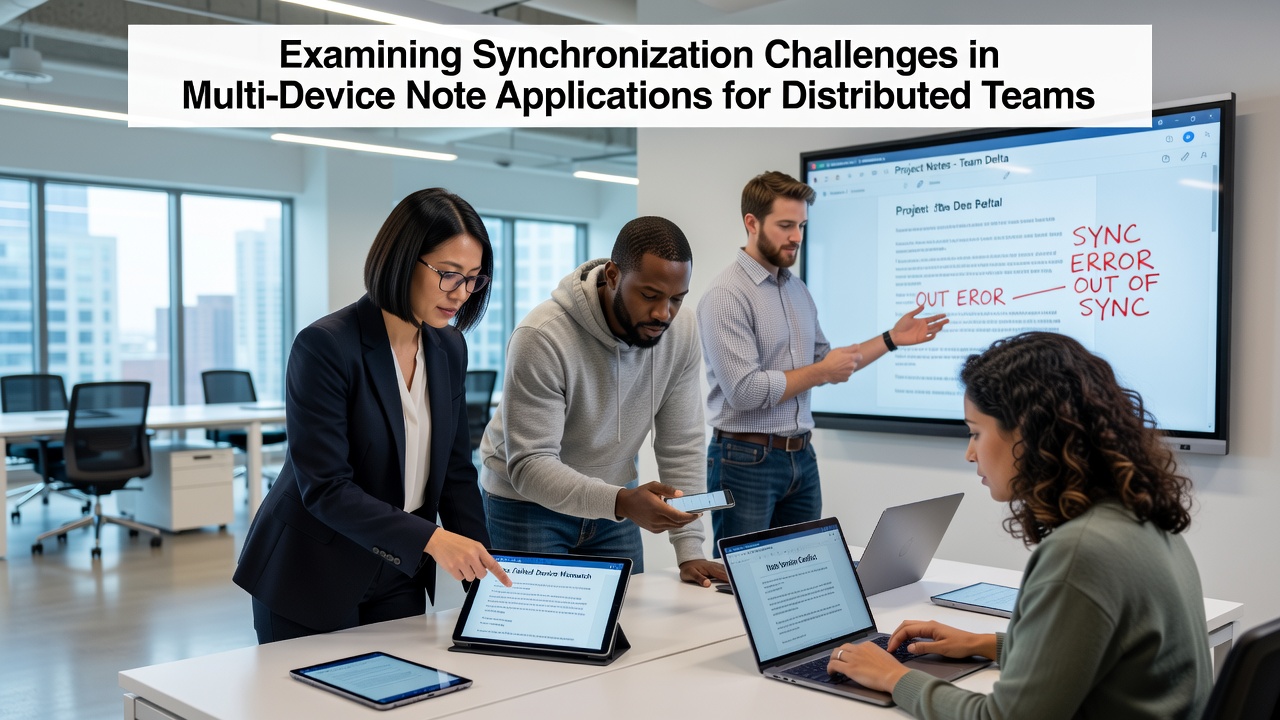
Distributed teams rely on multi-device note applications to maintain shared records, yet synchronization issues frequently disrupt workflows when devices operate across different networks and time zones. These applications must handle concurrent edits, version conflicts, and data propagation delays while supporting users on smartphones, tablets, and desktops in locations that span continents.
Core Mechanics of Data Synchronization
Note applications employ conflict-free replicated data types or operational transformation algorithms to reconcile changes made on separate devices, and these systems track each modification with timestamps and unique identifiers before merging updates into a central or peer-to-peer repository. When one team member adds a task list on a laptop while another edits the same note on a phone, the application queues the operations and resolves overlaps through predefined rules that prioritize certain fields or merge text segments.
Primary Synchronization Obstacles
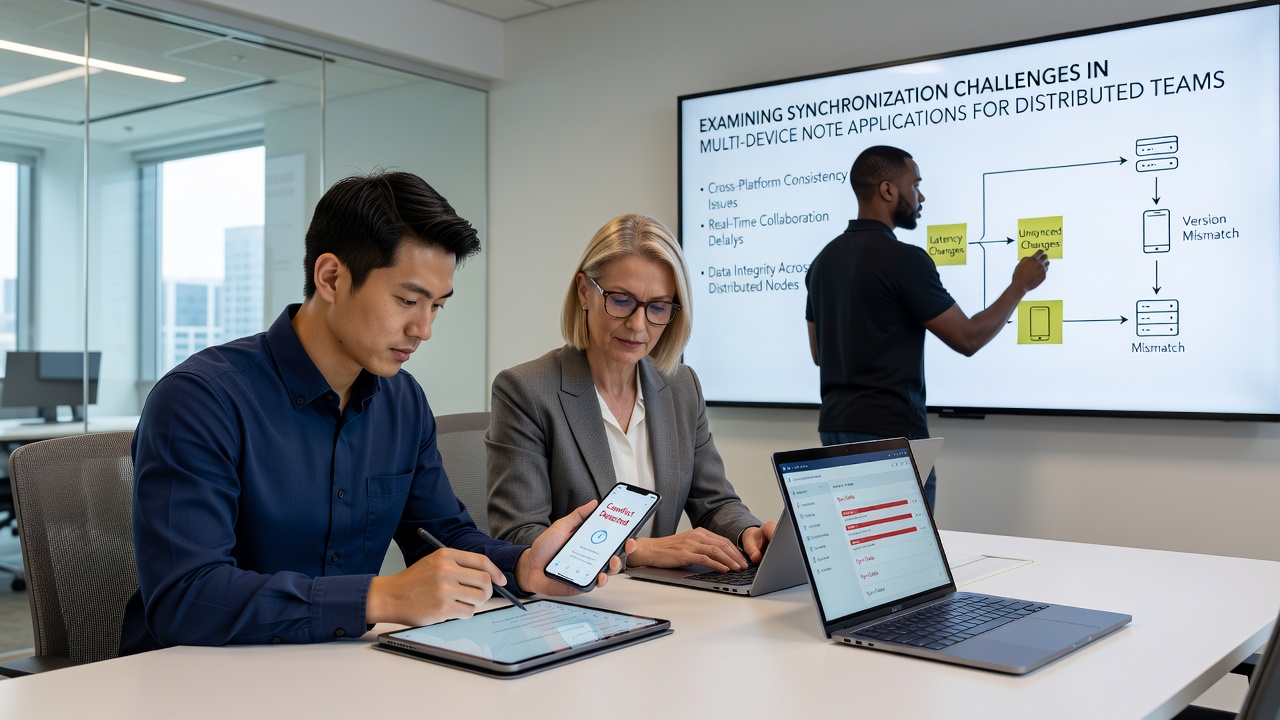
Network latency stands out as a persistent barrier because distributed teams often connect through variable bandwidth connections that delay the transmission of change logs between devices. Packet loss during transmission can leave some clients with incomplete state information, forcing the application to request retransmissions that extend resolution times. Offline periods compound the problem when users continue editing notes without connectivity, and upon reconnection the volume of accumulated changes overwhelms reconciliation engines that were designed for smaller delta sets.
Device heterogeneity introduces additional layers of complexity, since operating system differences affect how timestamps are generated and how local storage queues persist during power cycles. One study from the National Institute of Standards and Technology examined distributed system behaviors and found that clock skew between devices averaged several hundred milliseconds even when using network time protocol, which proved sufficient to invert the intended order of edits in high-frequency collaboration scenarios.
Impact on Team Productivity Metrics
Research from CSIRO in Australia tracked productivity indicators across several engineering teams that used multi-device note platforms and recorded measurable drops in task completion rates whenever synchronization conflicts exceeded two per hour per user. Those teams spent additional minutes each day reviewing automated merge suggestions, and unresolved conflicts occasionally led to duplicated entries that required manual cleanup during weekly reviews.
Emerging Protocol Improvements
Vendors have begun integrating vector clocks and causal ordering mechanisms that capture dependency relationships between edits more precisely than simple timestamps allow. These approaches reduce false conflict detections because they distinguish between independent changes and those that truly overlap in intent. In September 2026 several platforms plan to release beta versions of these enhanced protocols during developer conferences scheduled across North America and Europe, and early test deployments have shown reduced reconciliation times in controlled environments with simulated network partitions.
Security and Compliance Considerations
Synchronization traffic must traverse encrypted channels to protect sensitive project information, yet encryption overhead adds measurable latency that can push total sync cycles beyond acceptable thresholds for real-time collaboration. Regulatory frameworks in multiple jurisdictions now require audit logs of every data merge operation, and organizations must store these logs in formats that remain accessible for compliance reviews without compromising the performance of the synchronization layer itself.
Conclusion
Multi-device note applications continue to evolve their synchronization strategies in response to the demands of distributed teams, and ongoing work on ordering algorithms together with improved network resilience techniques offers measurable progress toward fewer unresolved conflicts. Teams that monitor conflict frequency and adopt platforms with transparent reconciliation logs position themselves to maintain consistent shared records across devices while meeting operational and regulatory requirements.