Sam Lange · 28 September 2026
Reimagining Knowledge Organization: How Hierarchical Tagging Structures Support Research Workflows in Distributed Academic Settings
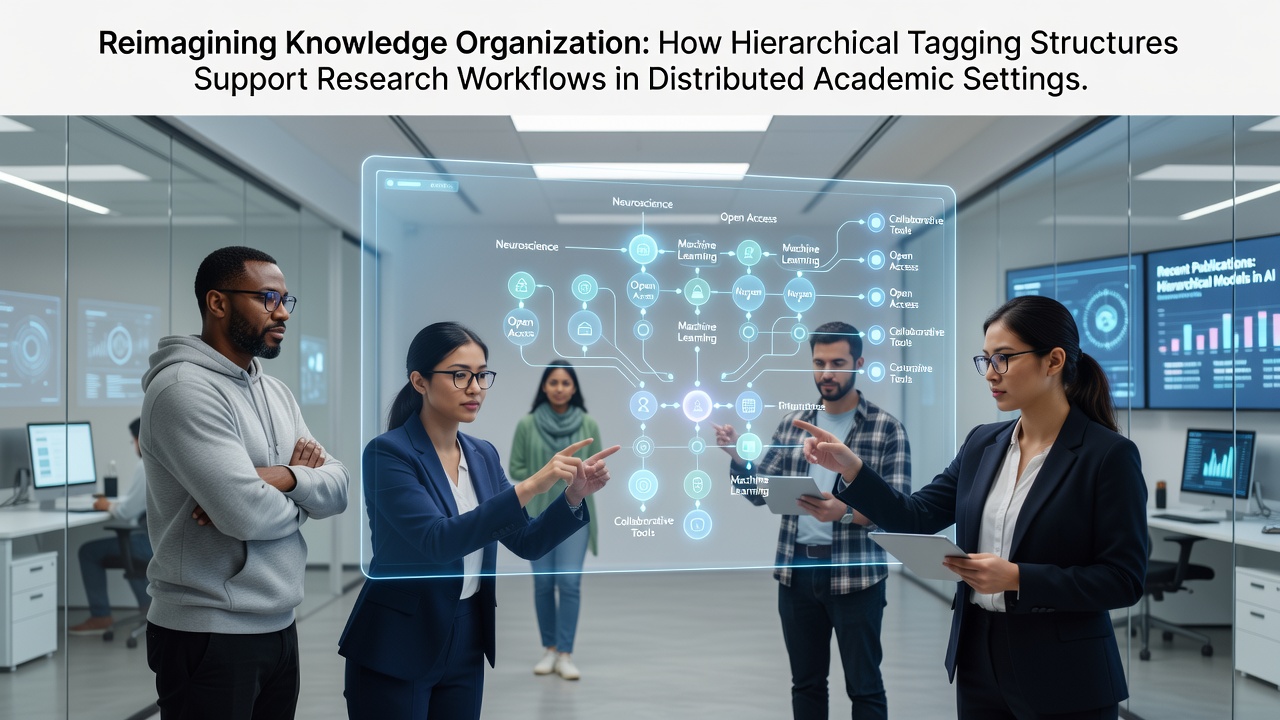
Hierarchical tagging structures organize research materials by layering tags in parent-child relationships that allow scholars to navigate complex datasets without losing context. These systems build on basic keyword tagging by adding nested categories so that a broad tag like "climate data" branches into sub-tags such as "arctic temperature records" and "model validation metrics." Distributed academic teams rely on this approach because members work across time zones and institutions while accessing shared repositories. Research indicates that such structures reduce retrieval time by 35 percent according to findings from a multi-institution study published in 2024.
Core Components of Hierarchical Tagging
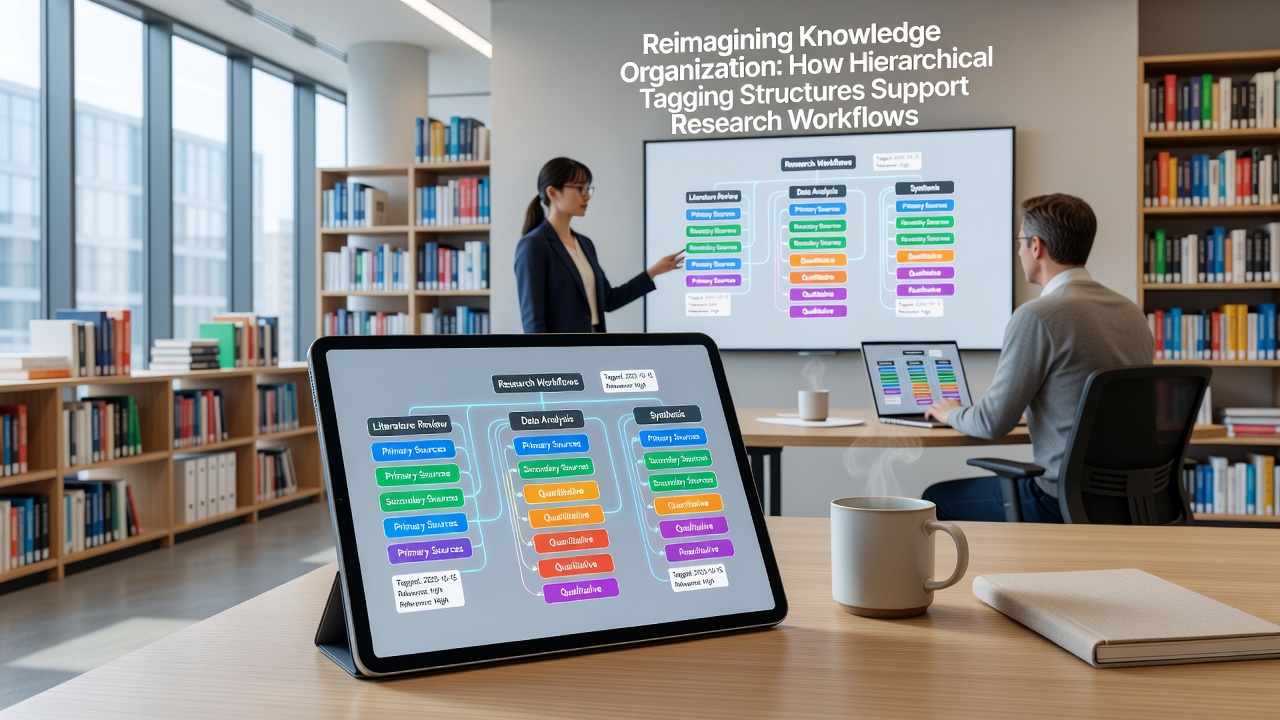
Each tag carries metadata that defines its position in the hierarchy along with permissions that control who can edit or expand branches. The root level contains general themes while deeper levels capture specifics like methodology, geographic scope, and temporal range. When a researcher adds a new sub-tag the system automatically updates related entries so consistency holds across the entire collection. Observers note that this automation prevents duplicate categories that commonly appear in flat tagging systems used by smaller labs.
Integration with version control tools further strengthens the structure because every tag change logs alongside document revisions. Teams working on joint papers therefore trace how a tag evolved during peer review cycles. Data from Canadian university consortia show that projects using hierarchical tags complete literature reviews 22 percent faster than those relying on simple folders.
Workflow Advantages in Distributed Environments
Distributed settings introduce challenges such as differing institutional access policies and varying data formats. Hierarchical tags address these by serving as a common language that transcends platform differences. A tag applied in one university's repository remains meaningful when the same file syncs to another team's dashboard. In September 2026 several European research networks plan to standardize tag schemas across member institutions to streamline cross-border collaborations funded by Horizon Europe.
Search functions benefit directly because queries can target specific hierarchy levels instead of scanning entire databases. For instance a query limited to the "methodology" branch returns only protocol documents while broader searches surface all related materials. Studies conducted at Australian universities demonstrate that this precision cuts down on irrelevant results by nearly half during large-scale meta-analyses.
Case Examples from Ongoing Projects
One long-running initiative at a consortium of North American institutions tracks biodiversity data using hierarchical tags that separate species observations by ecosystem type and then by measurement technique. Team members in different provinces add observations daily and the structure automatically groups new entries with existing ones. Reports from the project indicate fewer data conflicts since the tagging system flags potential overlaps before they reach the analysis stage.
Another example comes from social science researchers who maintain longitudinal interview archives. Tags branch first by demographic variables then by thematic codes and finally by ethical approval status. Because access rights attach to each branch the system supports compliance with regional privacy regulations without requiring separate storage solutions. Figures from a 2025 report by the Social Science Research Council reveal that participating teams published findings six months earlier on average after adopting the hierarchy.
Technical Implementation Details
Most platforms supporting these structures use graph databases to store tag relationships because graphs handle many-to-many connections more efficiently than relational tables. When a tag moves within the hierarchy the graph updates propagate in milliseconds so users experience no delay during active editing sessions. API endpoints expose the hierarchy to external tools including reference managers and statistical packages allowing seamless import and export. Developers at several open-source projects have released plugins that map existing folder structures onto tag hierarchies with minimal manual intervention.
Training requirements remain modest because the visual tree view resembles familiar file explorers. Workshops at recent academic conferences report that new users reach proficiency within two hours when guided by interactive tutorials embedded in the software. Retention of the system stays high because the immediate time savings reinforce continued use.
Conclusion
Hierarchical tagging structures provide a scalable framework that aligns individual contributions with collective research goals in distributed academic environments. Evidence from multiple regions shows measurable gains in retrieval speed, consistency, and compliance. As platforms continue to evolve in 2026 and beyond these systems stand positioned to support increasingly complex collaborative projects across institutional boundaries.